Introduction
Home security is shifting from professionally installed, subscription-locked systems to wireless, self-installed, AI-powered devices. The global market is valued at $38.1 billion in 2026 and is projected to reach $117.3 billion by 2034, a 15.1% CAGR (Future Market Insights). The security camera segment is growing even faster at 22.1%.
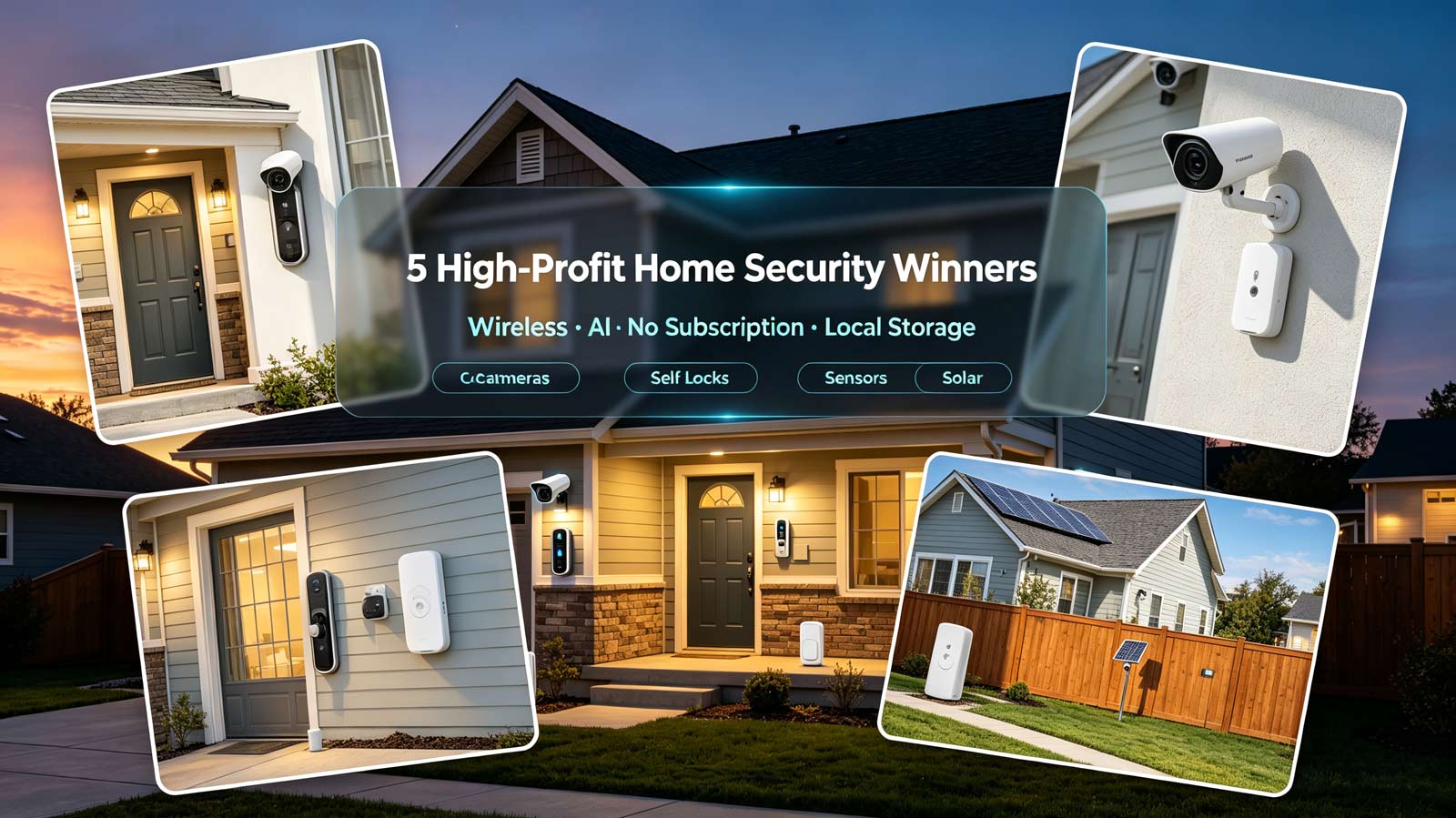
Three forces drive this window: climbing package theft, collapsing AI chip costs, and privacy regulation pushing buyers toward local storage. AI detection is becoming standard equipment — and "no subscription, no cloud" is becoming a conversion lever. Here are five high-profit winners for 2026.
AI Wireless Outdoor Security Camera
The anchor category of the entire boom. On 1688, battery-powered outdoor cameras with AI detection wholesale for $11 to $21. On Amazon, they sell for $39.99 to $89.99. That delivers 50–65% margins at the $59.99 median.
The winning pitch is on-device AI human, vehicle, and pet detection. It slashes the false alarms from swaying trees and passing headlights — the complaint that dominates negative reviews in this niche. Full-color night vision, two-way audio, and IP66 weatherproofing round out a spec sheet that sells itself.
On the content side, TikTok favors night-vision comparison clips and "false alarm challenge" videos that prove AI accuracy. Instagram suits whole-property coverage layouts and vacation-home monitoring stories.
When sourcing, verify the AI runs on-device rather than in the cloud. Treat 5,200mAh batteries as entry level — 10,000mAh or more is what supports the marketing claim. And confirm the companion app is stable and rebrandable: a buggy app destroys ratings faster than any hardware defect.
Video Doorbell
The highest-velocity entry point, with package theft as its emotional trigger. Wholesale prices run $8 to $17 on 1688 against Amazon's $29.99 to $79.99. Expect 55–70% margins at the $49.99 median.
Package-detection alerts, 2K HDR with a head-to-toe viewing angle, and an included indoor chime make this an easy whole-household purchase.
TikTok porch-pirate compilations and "we caught them" clips remain a proven traffic magnet. Instagram rewards entryway aesthetic upgrades.
Two sourcing cautions matter most. Cold-climate range is the hidden quality divider — cheap batteries fail at -10°C and generate one-star reviews in Canada and Northern Europe. And forced cloud subscriptions are now a conversion killer, so prioritize models with local storage or optional plans.
Smart Lock
The highest-ticket item here — and the natural upsell once customers trust your camera brand. At $14 to $28 wholesale and $59.99 to $149.99 on Amazon, expect 45–60% margins at the $89.99 median.
Fingerprint, keypad, and app unlocking covers households with kids and service providers. A no-drill retrofit design installs over an existing deadbolt in ten minutes, which opens the renter market. Airbnb hosts are a powerful secondary audience, since remote codes eliminate key handoffs entirely.
TikTok's hands-full grocery-bag unlock demo is a classic. "I locked myself out for the last time" storytelling converts well.
Before committing inventory, verify compatibility with US ANSI deadbolt standards. Confirm emergency power options — USB-C or 9V terminals — for dead-battery lockouts. Then test app responsiveness: a lock that opens in four seconds feels broken even when it works.
Door & Window Sensor Alarm Kit
The gateway product for renters and apartment dwellers — a market cameras and locks largely miss. Hub-based starter kits wholesale for $6 to $11 and sell on Amazon for $24.99 to $59.99, producing 55–70% margins.
The pitch is extreme simplicity: peel-and-stick installation in under five minutes, no tools, no drilling, fully portable when tenants move. Expandable ecosystems and a 100dB+ siren keep buyers adding sensors over time.
TikTok's "securing my apartment for under $50" format performs strongly with young urban renters. Instagram suits clean, minimal smart-apartment setups.
One sourcing rule: protocol stability matters more than feature count. WiFi sensors are simplest but drain batteries faster; Zigbee or hub-based kits are more reliable. Cross-check claimed battery life against real reviews before listing.
Solar-Powered Security Camera
The differentiated winner that separates serious sellers from copycats. Solar combos wholesale for $17 to $31 and retail on Amazon for $49.99 to $99.99. That yields 50–65% margins at the $69.99 median.
Zero-maintenance operation — no wiring, no ladder trips — plus 2K recording with a built-in spotlight. This combo uniquely unlocks barns, farms, construction sites, and cabins where running power cable would cost hundreds.
TikTok rewards barn and farm install videos. Instagram suits the off-grid cabin aesthetic.
The critical sourcing check is solar panel wattage. Undersized panels in low-sun regions create the "died in a week" review cluster. Verify panel efficiency, battery buffer for consecutive cloudy days, and prioritize PIR-plus-radar dual detection to cut solar-draining false recordings.
Final Thoughts
Three threads run through all five winners. Wireless, no-drill installation is the core logic: renters are the largest underserved market in home security. AI detection accuracy is the quality dividing line, since false alarms are the top source of returns. And privacy positioning is the new conversion lever — "local storage, no monthly fee" has gone from niche preference to mainstream demand.
The window is open, but competition is accelerating. Use ShopFindBiz to monitor competitor pricing, ad creatives, and new-product velocity in real time. Validating winners early is how you capture maximum upside in this DIY home protection boom.