Introduction
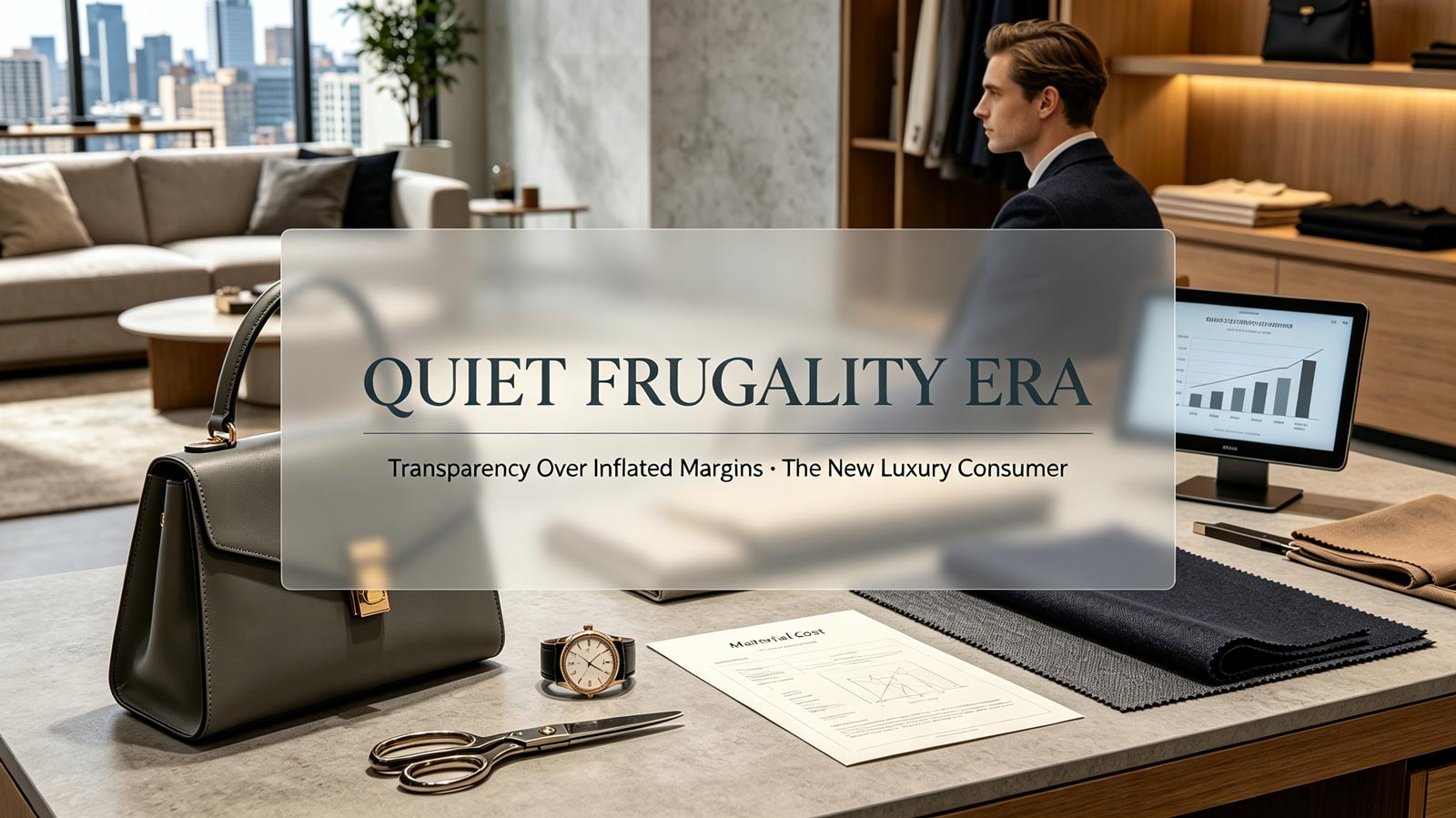
The luxury market has undergone a dramatic transformation in recent years, with the once-dominant trend of "quiet luxury" evolving into what analysts now term "quiet frugality." This shift, culminating in the 2026 premium pricing collapse, represents a fundamental change in consumer behavior and market dynamics. Where discreet branding and understated elegance once commanded premium prices, today's consumers are rejecting inflated margins while still demanding exceptional quality. This article examines the economic, social, and technological factors that precipitated this seismic industry shift, analyzes its impact across key luxury sectors, and explores how premium brands can adapt to thrive in this new era.
The Rise and Fall of Quiet Luxury
The quiet luxury trend emerged in the early 2020s as a reaction against conspicuous consumption, with affluent buyers favoring subtle craftsmanship over logo-heavy designs. For several seasons, brands like Loro Piana, Bottega Veneta, and The Row dominated the premium market with their minimalist aesthetics. However, three key factors undermined this movement's economic viability:
- Value Transparency: Digital platforms like Vestiaire Collective and ReSeal exposed the true production costs of luxury goods, eroding perceived value
- Economic Downturn: The 2024-2026 recession forced even high-net-worth individuals to scrutinize discretionary spending
- Generational Shift: Gen Z and Alpha consumers rejected traditional luxury markers entirely, favoring experiential investments over material goods
By mid-2026, the average price premium for quiet luxury items had declined 37% from peak 2023 levels, according to Bain & Company's Luxury Goods Worldwide Market Study.
Market Sector Breakdown: Where the Collapse Hit Hardest
The pricing correction affected luxury categories unevenly, with some segments experiencing near-total value erosion while others demonstrated surprising resilience. Fashion accessories suffered most severely, with handbag prices dropping 42% as consumers questioned the justification for $4,000 tote bags. Watches between $10,000-$50,000 saw 28% depreciation as smartwatch integration became universal. However, three sectors bucked the trend:
- Ultra-High Jewelry: Rare gemstone pieces maintained value due to intrinsic material worth
- Heritage Automobiles: Limited-production classics actually appreciated 12%
- Custom Tailoring: Bespoke services retained their pricing power through personalization
Market analysts note that items with verifiable scarcity or true craftsmanship differentiation maintained pricing integrity, while mass-produced "luxury" goods crashed hardest.
The New Consumer Psychology Behind Quiet Frugality
Modern luxury consumers aren't rejecting quality—they're rejecting arbitrary markups. A 2026 McKinsey study revealed that 78% of premium buyers still seek exceptional products but now demand transparent pricing structures. This has given rise to the "quiet frugality" movement characterized by:
- Preference for direct-to-consumer brands cutting out wholesale margins
- Subscription-based access over ownership models (e.g., luxury fashion rental)
- Radical transparency about sourcing and production costs
Successful brands like New York-based Atelier Munro now disclose their full cost breakdowns, showing materials (42%), labor (38%), and operating margins (20%)—a level of transparency unthinkable in 2020.
Strategies for Luxury Brands in the Post-Collapse Era
Forward-thinking houses are adapting through five key strategies that acknowledge the new market reality while preserving brand equity. First, implementing variable pricing models that adjust for real-time demand rather than maintaining artificial price floors. Second, developing certified pre-owned programs that acknowledge product lifecycle value. Third, creating "clienteling" programs that build long-term relationships rather than transactional interactions. Fourth, investing in blockchain authentication to ensure secondary market integrity. Fifth, developing hybrid digital-physical experiences that justify premium pricing through exclusivity and access.
LVMH's innovative "Craftsmanship Cloud" platform exemplifies this approach, offering virtual masterclasses with artisans alongside physical product purchases.
Conclusion
The 2026 premium pricing collapse marks not the end of luxury, but its democratization. Brands that recognize this shift as an evolution rather than a crisis will thrive by focusing on authentic value creation over artificial scarcity. The future belongs to those who can balance exceptional quality with fair pricing, combining the discretion of quiet luxury with the honesty of quiet frugality. As consumer expectations continue evolving, the most successful players will be those who view transparency not as a threat, but as their greatest competitive advantage in rebuilding trust with a fundamentally changed luxury consumer.