Introduction
The fourth quarter has traditionally been the golden period for retailers, with Black Friday, Cyber Monday, and holiday sales driving massive revenue. However, the landscape is shifting dramatically. Early-bird restocking in August, once a strategic advantage, has become a financial trap locking 40% more working capital than necessary. This article explores the hidden cost drivers behind this phenomenon and provides actionable insights to optimize procurement timelines. With rising warehouse costs, shorter sales windows, and evolving consumer behavior, businesses must rethink their Q4 strategies to preserve cash flow without sacrificing peak season opportunities.
The Hidden Cost Drivers of Early Restocking
August restocking was historically seen as a way to secure inventory ahead of competitors. However, three major factors have turned this practice into a capital drain. First, warehouse costs have surged by 25% year-over-year due to inflation and increased demand for storage space. Holding inventory for an extra two months now eats into profit margins significantly. Second, supply chain disruptions have normalized, reducing the need for early stockpiling. Manufacturers have adapted to deliver faster turnaround times, making August orders unnecessary. Third, consumer spending patterns have shifted, with more purchases happening later in the season. Early inventory often leads to overstocking and markdowns.
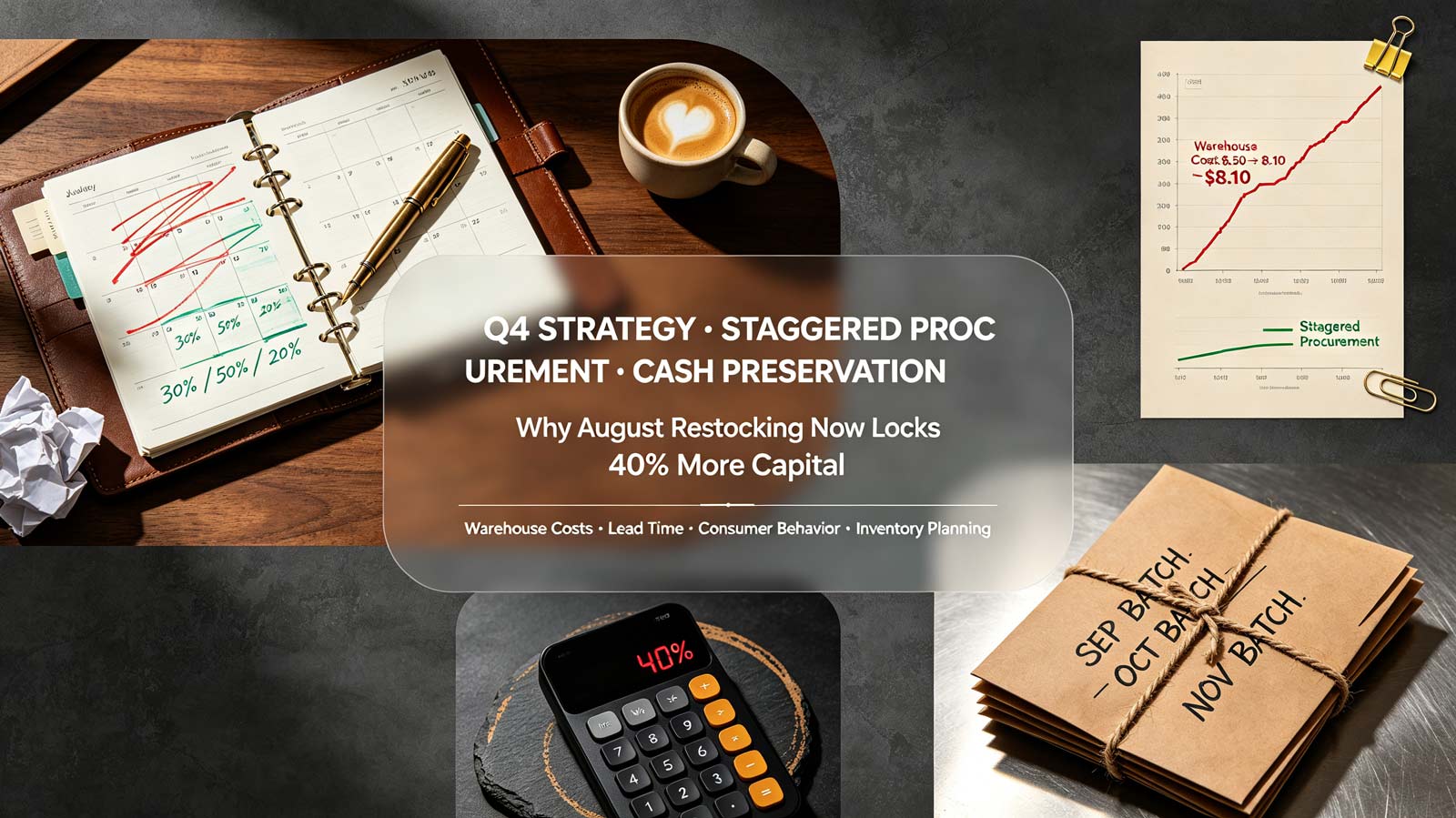
- Warehouse Cost Surge: The average cost per square foot for storage has increased from $6.50 to $8.10 in key logistics hubs.
- Supply Chain Stabilization: Lead times have decreased by 30% compared to 2022, reducing the need for early procurement.
- Changing Consumer Behavior: 60% of holiday shoppers now wait until November to make purchases, according to recent surveys.
The Staggered Procurement Timeline
To avoid the early-bird trap, businesses should adopt a staggered procurement approach. This method spreads orders across multiple months, aligning inventory levels with actual demand forecasts. Begin with a small batch in September to cover early holiday shoppers, followed by a larger order in October. Reserve a final order in November for last-minute replenishment. This strategy reduces warehouse holding costs and minimizes excess inventory risk. Advanced analytics tools can help fine-tune the timing and quantities, ensuring optimal stock levels without overcommitting capital.
Implementing this approach requires close collaboration with suppliers. Negotiate flexible contracts that allow for staggered deliveries without penalties. Leverage real-time sales data to adjust procurement plans dynamically. For example, if early sales exceed expectations, trigger additional orders immediately rather than waiting for the next scheduled batch. This agility ensures businesses can capitalize on demand spikes without tying up capital prematurely.
- September: 30% of projected Q4 inventory to cover early shoppers.
- October: 50% to align with peak demand buildup.
- November: 20% for replenishment and last-minute opportunities.
Case Studies: Successes and Pitfalls
Several retailers have successfully navigated the early-bird trap by adopting staggered procurement. For instance, a mid-sized electronics retailer reduced its August inventory commitment by 50% in 2025, saving $1.2 million in warehouse costs. By reallocating that capital to targeted November marketing campaigns, they achieved a 15% higher conversion rate. Conversely, a fashion brand that stuck to traditional August restocking faced a 35% overstock situation, leading to steep December discounts that eroded margins.
Another example is a home goods chain that used predictive analytics to adjust procurement in real time. By monitoring early sales trends, they pivoted from planned October orders to smaller, more frequent shipments. This reduced their carrying costs by 22% while maintaining 98% in-stock rates during peak weeks. These cases highlight the importance of flexibility and data-driven decision-making in modern inventory management.
Best Practices for Q4 2026 Inventory Planning
To optimize Q4 inventory strategies, businesses should focus on four key areas. First, invest in demand forecasting tools that incorporate real-time market data. Second, build strong supplier relationships to enable flexible ordering and rapid replenishment. Third, monitor warehouse costs closely and consider alternative storage solutions like on-demand warehousing for peak periods. Fourth, align procurement with marketing campaigns to ensure inventory arrives precisely when promotions go live.
Additionally, businesses should conduct a thorough post-Q4 analysis each year. Review what worked and what didn’t, and adjust strategies accordingly. For example, if certain product categories showed consistent early demand, consider allocating a slightly higher percentage to September orders for those items. Continuous improvement is essential to staying ahead in today’s volatile retail environment.
- Leverage Advanced Analytics: Use AI-powered tools to predict demand spikes and adjust orders dynamically.
- Negotiate Supplier Flexibility: Secure contracts that allow for mid-season adjustments without penalties.
- Optimize Warehouse Strategy: Explore hybrid models combining long-term and short-term storage solutions.
Conclusion
The August restocking rush is no longer the strategic advantage it once was. With rising costs and shifting consumer behavior, businesses must adopt smarter procurement strategies to preserve capital and maximize profitability. By implementing a staggered procurement timeline, leveraging real-time data, and fostering supplier flexibility, retailers can navigate Q4 2026 with confidence. The key is to balance inventory availability with financial efficiency, ensuring readiness for peak demand without falling into the early-bird trap. Start planning now to secure a competitive edge in the upcoming holiday season.