Introduction
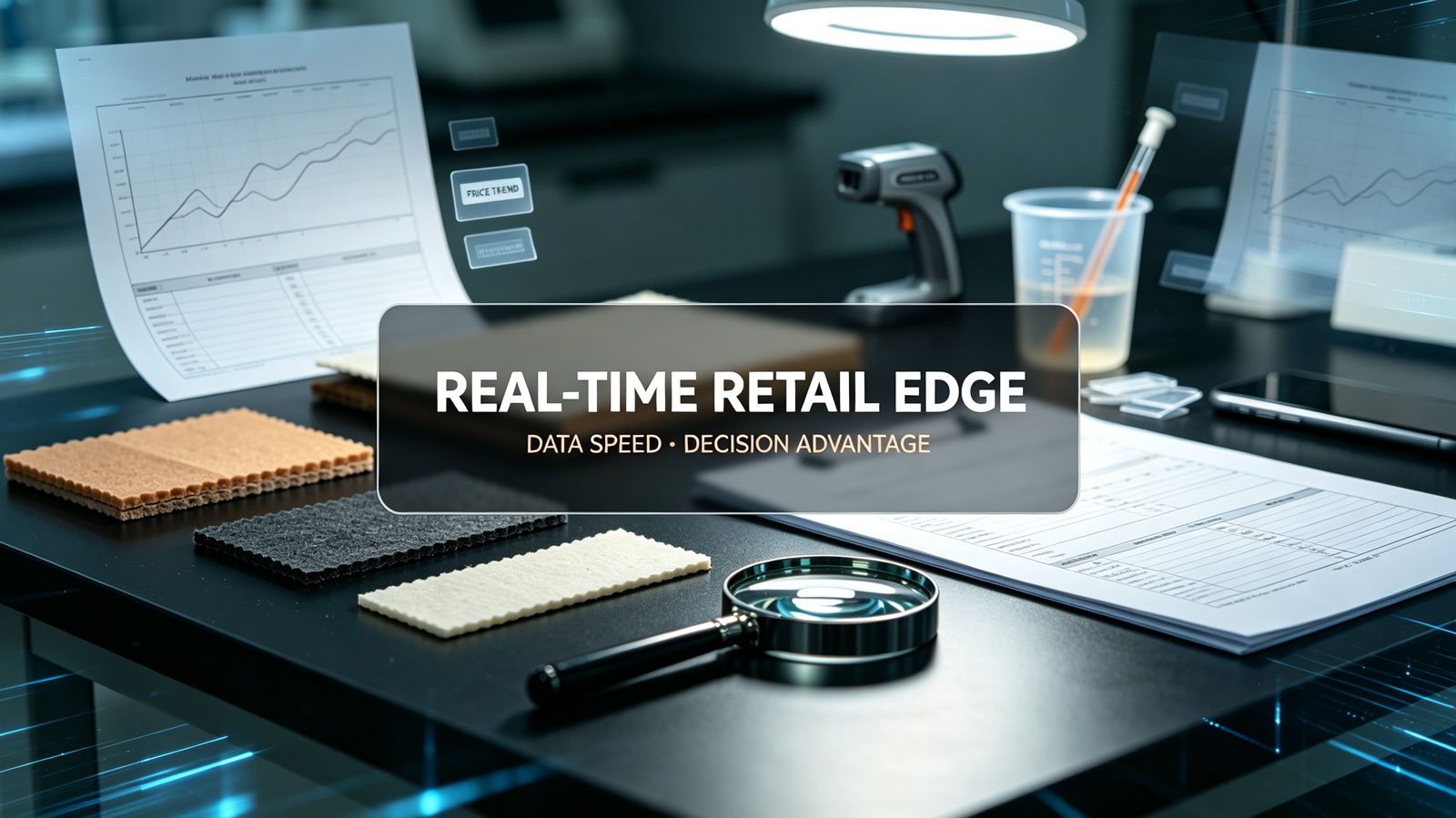
In the rapidly evolving world of retail, where consumer preferences shift like desert sands and market conditions change overnight, one factor has emerged as the ultimate competitive advantage: real-time data speed. The retail landscape of 2026 has proven that success no longer belongs to those with the deepest pockets or largest warehouses, but to businesses capable of making light-speed decisions based on up-to-the-second market intelligence. What used to take teams of analysts weeks to uncover can now be detected in three seconds through advanced AI-powered tools, creating unprecedented opportunities for agile retailers to outmaneuver slower competitors.
The concept of the 3-second advantage represents a fundamental shift in retail strategy. Where once competitive moats were built on physical infrastructure, distribution networks, and brand recognition, today's most formidable advantages are constructed from data pipelines and analytical velocity. This article explores how real-time intelligence has become the great equalizer in modern retail, how leading companies are leveraging it, and what practical steps businesses of all sizes can take to harness the power of instantaneous insights.
The Data Velocity Revolution in Retail
The retail industry has undergone three distinct technological revolutions in recent decades. First came digitization, which moved transactions and catalogues online. Next arrived big data analytics, allowing for deeper customer understanding. Now we're experiencing the velocity revolution, where the speed of insight generation has become the critical differentiator. Research shows that market leaders who implement real-time data systems achieve 37% faster response times to supply chain disruptions and 28% greater price optimization effectiveness compared to competitors relying on traditional weekly reporting cycles.
What makes real-time data particularly transformative is its democratizing effect on retail competition. Smaller, nimbler retailers can now compete on equal footing with industry giants by:
1. Detecting micro-trends in consumer behavior before they appear in quarterly reports
2. Adjusting pricing dynamically based on competitor movements and inventory levels
3. Identifying supply chain bottlenecks the moment they emerge rather than weeks later
4. Personalizing customer experiences based on real-time browsing and purchase data
The infrastructure required to achieve this 3-second advantage combines several cutting-edge technologies. At the foundation lies cloud computing, providing the scalable processing power needed for instantaneous analysis. Layered atop are AI and machine learning algorithms capable of detecting patterns human analysts might miss, coupled with automated decision systems that can implement changes without human intervention when appropriate.
Winning Strategies for Real-Time Retail
Forward-thinking retailers are implementing the 3-second advantage across four key operational areas with remarkable results. In pricing strategy, companies like REI have reduced price adjustment lag time from 48 hours to literally seconds, responding to market changes with surgical precision. Their AI systems monitor competitor pricing, inventory levels, and even social media sentiment to recommend optimal pricing adjustments in real time. Early adopters report 9-12% improvements in margin protection during volatile market periods.
Inventory management represents another area where real-time data shines. Nike's RFID-enabled inventory system updates stock levels across channels every 15 seconds, allowing the company to:
1. Prevent 87% of potential out-of-stock situations through predictive alerts
2. Reduce warehouse-to-store transfer times by 32% through dynamic routing
3. Cut excess inventory costs by automatically adjusting production forecasts
Customer experience personalization has also been transformed by real-time data. Sephora's Color IQ system analyzes customer interactions across web, mobile, and in-store channels to serve hyper-relevant product recommendations instantly. The system processes over 300 data points per customer interaction, resulting in a 23% higher conversion rate for personalized experiences versus generic suggestions.
Implementation Roadmap for Retailers
Transitioning to a real-time operational model requires careful planning across technology, processes, and personnel. The first step involves establishing a real-time data pipeline that can capture, process, and analyze information within the critical 3-second window. This typically requires upgrading from batch-processing systems to event-driven architectures using technologies like Apache Kafka or AWS Kinesis. Middle-market retailers should expect to invest $150,000-$300,000 in initial infrastructure to achieve basic real-time capabilities.
Equally important is developing the organizational capability to act on real-time insights. This involves:
1. Creating cross-functional rapid response teams trained to evaluate and implement AI recommendations
2. Establishing decision protocols for various scenarios (automated vs human-reviewed actions)
3. Implementing real-time dashboards that provide visualized insights across departments
4. Conducting regular war game exercises to prepare teams for fast-paced decision making
Perhaps the most challenging aspect isn't technological but cultural. Organizations accustomed to weekly or monthly reporting cycles often struggle to adapt to the immediacy of real-time operations. Successful implementations typically begin with pilot programs in specific departments before scaling company-wide, allowing teams to gradually acclimate to the accelerated decision-making pace.
The Future of Retail Velocity
As we look beyond 2026, the value of data velocity will only increase. Emerging technologies like quantum computing promise to reduce analysis times from seconds to milliseconds, while advanced predictive AI will enable truly anticipatory retail where actions precede customer requests. Early experiments in this space show remarkable potential—Walmart's Project Zero initiative uses real-time shelf monitoring combined with predictive analytics to restock products before they run low, achieving a 99.3% in-stock rate compared to the industry average of 92%.
However, with great speed comes great responsibility. Retailers must balance their pursuit of real-time advantages with ethical considerations around data privacy and algorithmic fairness. The most successful implementations will be those that combine unprecedented speed with human oversight and values-based constraints. Leaders who master this balance will dominate their categories, while those who fail to adapt to the velocity revolution risk becoming footnotes in retail history.
Conclusion
The 3-second advantage has redefined what it means to compete in modern retail. No longer are size and scale the primary determinants of success—today, it's speed of insight and action that separates market leaders from also-rans. By implementing real-time data systems, retailers of all sizes can detect trends faster, optimize operations more precisely, and serve customers more personally than ever before. The path to implementation requires both technological investment and organizational adaptation, but the rewards—increased margins, improved efficiency, and enhanced customer loyalty—make it a transformation worth pursuing with urgency. In the race for retail supremacy, remember: in 2026 and beyond, the early AI gets the sale.