Introduction
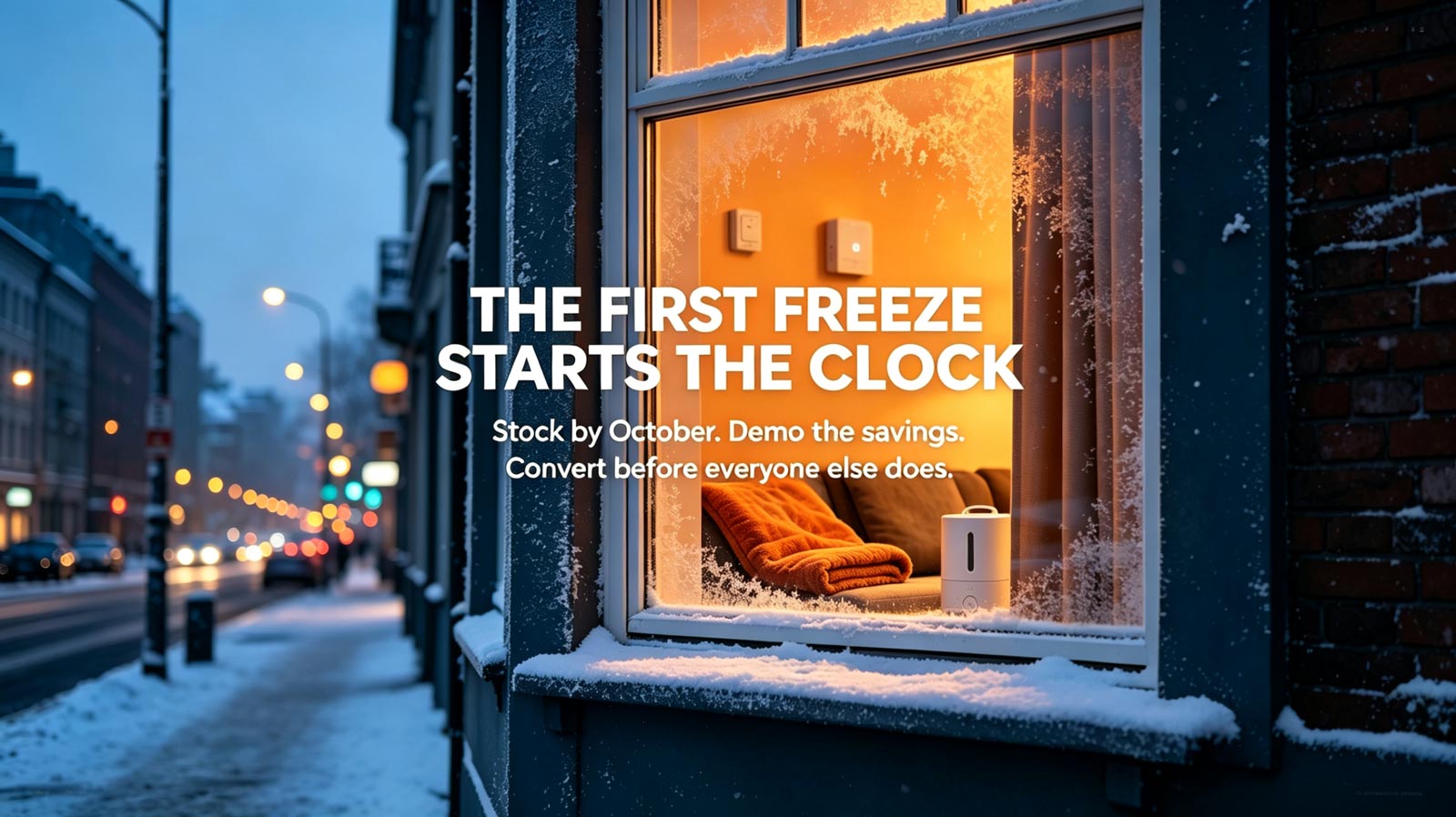
One cold snap can empty a warehouse of heated blankets before December even starts. Winter home comfort demand climbs from late September and peaks between November and January — but the sellers who capture it are the ones who stocked in October, before Q4 freight rates surge and supplier lead times stretch.
This guide covers five categories built for the season: heated throws, smart thermostats, draft stoppers, humidifiers, and thermal curtains — why buyers pull the trigger, where the margin sits, and what to check before you list.
The Psychology of Winter Comfort Buying
Energy anxiety is the real purchase trigger. With heating costs elevated across North America and Europe, consumers are heating the person, not the room — sealing drafts, adding moisture to dry heated air, and layering windows instead of turning thermostats up. Every product below sells against the backdrop of a heating bill, which means savings framing consistently outperforms comfort framing in ads.
Winter comfort products also demo themselves. A thermometer reading, a tissue test, an infrared gun — ten seconds of video proves the value proposition, which is exactly what short-form platforms reward.
What Makes a Winter Winner
The best cold-season candidates share three traits:
-
Clear energy-saving logic: buyers can connect the product to a smaller bill
-
Instant visual proof: value demonstrated in one clip, no explanation needed
-
Logistics-friendly build: light, compressible, and durable in transit
Five Categories to Source Now
Choose products that are easy to demo, easy to ship, and simple to explain in one image.
Heated throw
sourced at $5–10 on 1688, selling for $29.99–49.99 on Amazon at 50–65% margins. Fast warm-up, auto shut-off, and a detachable washable controller are the features buyers name in positive reviews. Bill-comparison content converts best; require ETL/CE certification before listing.
Smart thermostat
sourced at $6–14, selling for $24.99–59.99 at 45–60% margins. Programmable control cuts heating costs roughly 10–15%, and app control plus Alexa/Google compatibility drive conversion. Installation time-lapse videos remove buyer hesitation; state supported heating-system types clearly, since wiring incompatibility is the top return trigger.
Door draft stopper
sourced at $0.3–1.2, selling for $8.99–16.99 at 65–80% margins — the highest on this list. The ten-second tissue test, a leaking door gap sealed on camera, is the entire pitch. Check filling density and give clear size guidance; sizing confusion drives most negative reviews.
Humidifier
sourced at $3–7, selling for $19.99–39.99 at 50–65% margins. A 4L tank, under-30dB operation, and auto shut-off cover the three non-negotiables. Pair it with a hygrometer on camera for self-explanatory content; leak-proof tank seals are the top sourcing priority.
Thermal curtains
sourced at $2–5 per panel, selling for $18.99–39.99 at 55–70% margins. The infrared thermometer test — window surface temperature before and after hanging — argues the whole value proposition in seconds. Request fabric samples to verify weight, and state blackout percentage and panel count precisely.
Strategies for Maximizing Winter Revenue
Use October to win the search window, then let the season work for you.
-
Stock against the first freeze: lock samples by late September, place volume orders in October, and clear customs before the pre-holiday freight surge
-
Bundle the low-ticket items: draft stoppers and humidifiers need multi-unit or cross-category bundles to absorb shipping and lift average order value
-
Sell the demo, not the spec: lead ads with bill comparisons, tissue tests, and thermometer readings instead of feature lists
-
Plan the exit: schedule post-season markdowns before peak shipping ends, so winter stock does not become January storage fees
Compliance and Risk Checks
Before listing, verify ETL or CE certification for heated throws, FCC or CE for smart thermostats, and BPA-free materials for humidifiers. Price in breakage risk, sizing-related returns, and compatibility questions so the season stays profitable after the gift rush.
Conclusion
Winter demand does not wait for prepared sellers — it waits for stocked ones. Build your Q4 lineup around products people can see working, buy on impulse, and justify with a heating bill.
Shortlist two of the five categories, request samples this week, confirm certifications, and place your volume order before the first freeze makes everyone else a buyer.